

HR Business Partners are Key for Today’s Aviation needs

Aeroates CEO Giovanna Mirabile

Two members of cabin crew aboard aircraft
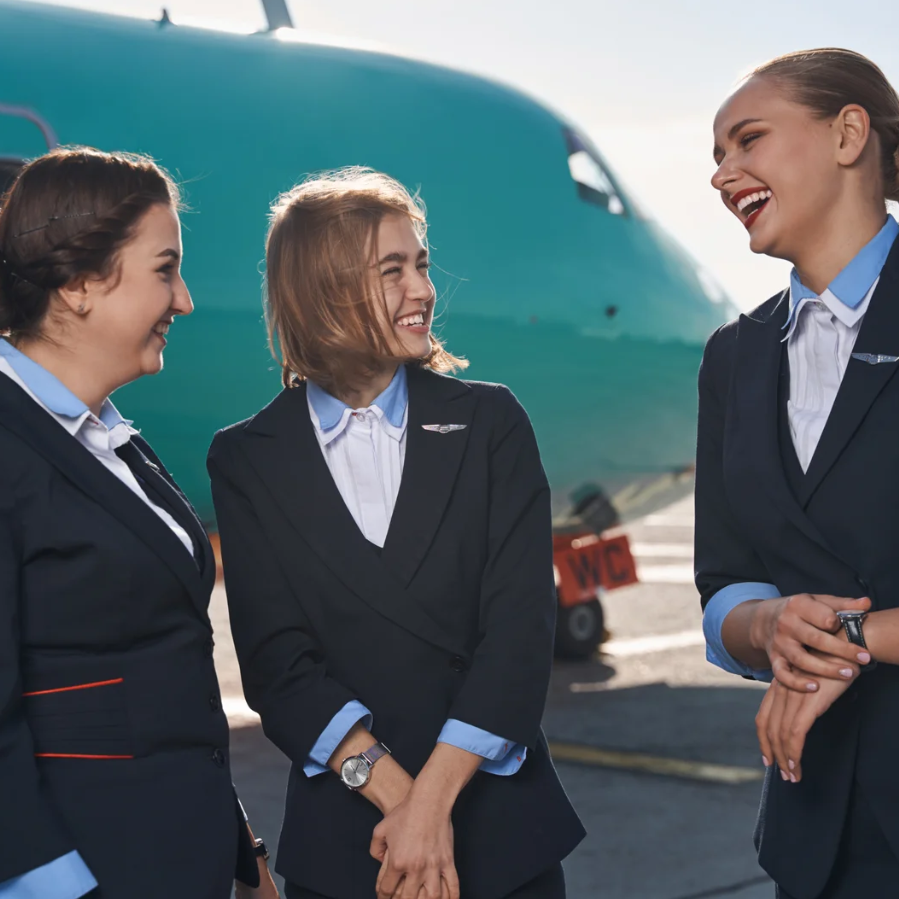
Cabin crew outside aircraft

Ground controller on runway
With a global need for 2.4 million new personnel by 2044, strategic HR partners are vital for navigating labour shortages, compliance, & operational resilience.
KALKARA, MALTA, May 14, 2026 /EINPresswire.com/ -- HR Business Partners are Key for Today’s Aviation needsAviation companies increasingly need expert help as it remains one of the most workforce-dependent industries in the world. Aircraft, slots, and capital alone do not drive growth without the right people in the right place at the right time.
As airlines, ACMI operators, MROs, and airport service providers expand internationally, HR has become a critical function tied directly to revenue, resilience, and operational continuity. Today’s employers must navigate labour shortages, cross-border compliance, volatile hiring cycles, and rising retention pressure in a highly competitive market. For this reason, strategic HR Business Partners are becoming essential allies for aviation companies seeking to scale efficiently and remain competitive.
Why HR Aviation Is Now a Boardroom Priority
In today’s dynamic corporate world, the HR function in many high performing companies companies has moved from a back-office function to a strategic unit. As international carriers, ACMI operators, charter groups, MROs, and airport service providers are expanding across multiple jurisdictions, they face the possibility of labour shortages, rising wage pressure, and complex compliance demands. According to the International Air Transport Association (AIATA), global travel demand has surpassed pre-pandemic levels and could double over the next two decades, increasing pressure on workforce planning.
Meanwhile, Boeing forecasts the industry will require 2.4 million new aviation personnel by 2044, including 660,000 pilots, 710,000 maintenance technicians, and 1 million cabin crew. While this growth will be driven in high demand regions, such as the Asia Pacific, many large scale international employers will need steady talent acquisition channels and robust workforce solution to meet future needs. In sum, winning tomorrow’s talent race requires smarter HR across borders strategies.
The Cross-Border HR Challenge in Aviation Employment
HR leaders across the aviation sector know that hiring one captain in Europe, one B1 engineer in the Gulf, and one operations planner in Asia can mean navigating three entirely different legal systems, tax regimes, and certification frameworks.
Licence Recognition and Regulatory Compliance
Pilots, engineers, and maintenance personnel often need authority-specific approvals by national and international authorities. An engineer licensed under European Union Aviation Safety Agency standards, for example, will need regulatory compliance validation prior to being deployed. Delaying processes with the respective authorities can undoubtedly disrupt workforce scheduling, or even ground expansion plans. In fact, McKinsey & Company estimates aviation maintenance technician shortages could reach 60,000 by 2029 if recruitment and training fail to keep pace. Likewise, licensed technicians and avionics specialists are becoming critical bottlenecks, especially with older fleets and engine reliability issues.
Turning to another critical role; if pilot hiring slows temporarily, long-term retirements and fleet growth could remain structural issues if talent acquisition pipelines are not optimised. Boeing claims that two-thirds of future hiring demand could eventually be replacement-driven, not growth-driven.
Retention Risk and Volatile Hiring Cycles
Aviation talent is globally mobile
In cross-border hiring, two of the most persistent workforce threats are retention risk and volatile hiring cycles. If not executed properly, both risks could directly affect airline profitability, operational resilience, safety culture, and long-term growth.
For international employers, understanding international deployment needs and optimising trends are essential when managing aviation personnel across borders. Pilots, engineers, cabin crew, dispatchers, and technical managers now more than ever move between countries and quickly. Airlines offering stronger roster patterns, more lucrative packages, or faster command upgrades, will be better positioned to retain staff.
Aviation is sensitive to external shocks
In recent history, the COVID pandemic and geopolitical shifts have been a source of major disruption.
Post COVID, airlines entered one of the biggest hiring booms in modern history. Major airlines hired more than 12,000 pilots in 2022–2023, prior to stabilising back toward sustainable levels. After tourism and business travel slowly came back to normal levels, airlines across the globe have been hiring aggressively. As air travel growth has outpaced expectations, the US projects 18,200 annual openings, while Boeing forecasts 660,000 new commercial pilots globally by 2044. However, pandemic-era hiring pauses worsened shortages in the aviation sector, while retirements continue to thin experienced ranks. Thus, the risk of succumbing to such sensitive external shocks persists.
Concurrently, today’s Middle East geopolitical tensions have caused unprecedented airspace closures, disrupting one of the world’s busiest aviation regions. At peak impact, nearly half of scheduled flights were affected, forcing airlines to rapidly reroute operations. This instability is impacting workforce planning, as operators cannot possibly manage disruption without flexible, scalable talent
To reduce risk, operators need rapid redeployment of pilots, engineers, and operations staff. Flexible crew pools, contract staffing, and global recruitment partners can help maintain continuity during geopolitical shocks. Furthermore, HR leaders have been dealing with crew displacements due to base closures, increased complexity in crew rostering and positioning, and a reluctance among staff to operate into high-risk regions.
The Advantage of taking on board External business partners.
To mitigate risks such as these, airline operators are poised to include strategic HR business partners in their strategy.
In-house HR teams are under growing pressure to manage retention risk, volatile hiring cycles, and increasingly complex cross-border employment demands. Internal teams may be highly capable, but sudden fleet growth, route launches, geopolitical disruption, or labour shortages can quickly exceed internal capacity. Similarly, Specialist HR partners in aviation provide immediate access to global talent networks, covering pilots, licensed engineers, cabin crew, dispatchers, and technical management. Apart from helping airlines respond faster during hiring surges, this also reduces the delays and revenue loss caused by grounded aircraft or understaffed bases.
External HR partners also maintain candidate pipelines during slower market periods, allowing operators to restart recruitment quickly when demand returns. From a retention perspective, external HR experts support compensation benchmarking, workforce planning, and employee engagement strategies based on current market conditions. Understanding what competing airlines are offering in salary, rosters, mobility packages, and career progression allows employers to strengthen retention before talent attrition begins.
Conclusion
The aviation sector now operates in a climate where talent availability can shape commercial success as much as fleet strategy or route access.
Ultimately, resilient airlines treat HR as operational infrastructure. By combining strong internal HR leadership with specialist partners, aviation companies can scale faster, hire smarter, and remain agile during market volatility. For international employers, cross-border compliance is equally critical. External partners can support hiring across multiple jurisdictions, navigating local labour law, payroll structures, visa processes, and contract frameworks.
These advantages reduce operational risk while enabling faster market entry or expansion.
Giovanna Mirabile
Aeroates Ltd
+356 2122 7333
email us here
Visit us on social media:
LinkedIn
Instagram
Facebook
YouTube
Legal Disclaimer:
EIN Presswire provides this news content "as is" without warranty of any kind. We do not accept any responsibility or liability for the accuracy, content, images, videos, licenses, completeness, legality, or reliability of the information contained in this article. If you have any complaints or copyright issues related to this article, kindly contact the author above.
